History of music

The Art of Fugue

Do you give much consideration to the structure of the music you play? For those of us who aren’t composers, the dark art of writing music can seem a bit of a mystery, but a little understanding will often help us play better. In previous posts I’ve talked about a selection of different musical forms - dances (Renaissance and Baroque), the canzona and sonata and the trio sonata too. While all of these musical forms have a common pattern, there’s another genre of composition which has perhaps the most formal structure - the fugue.

As recorder players we’ll often encounter fugues, whether we recognise them or not. Sometimes they’ll crop up during the course of a piece, and in this situation we often describe the music as being fugal - the composer uses elements of the fugue’s form without writing the complete fugue structure. Of course there are plenty of composers who’ve written formal, standalone fugues - perhaps the most obvious being J.S.Bach. As well as his Well Tempered Klavier (a collection of 48 preludes and fugues - two in every major and minor key) he went even further towards the end of his life, creating a work called The Art of Fugue. This is a collection of fugues, composed during the final decade of Bach’s life. It comprises fourteen fugues (he called them Contrapuncti) and four canons, all in D minor and all based in some way upon a single melodic phrase - truly the pinnacle of Baroque fugue writing and an example for future generations of composers to follow and build upon.
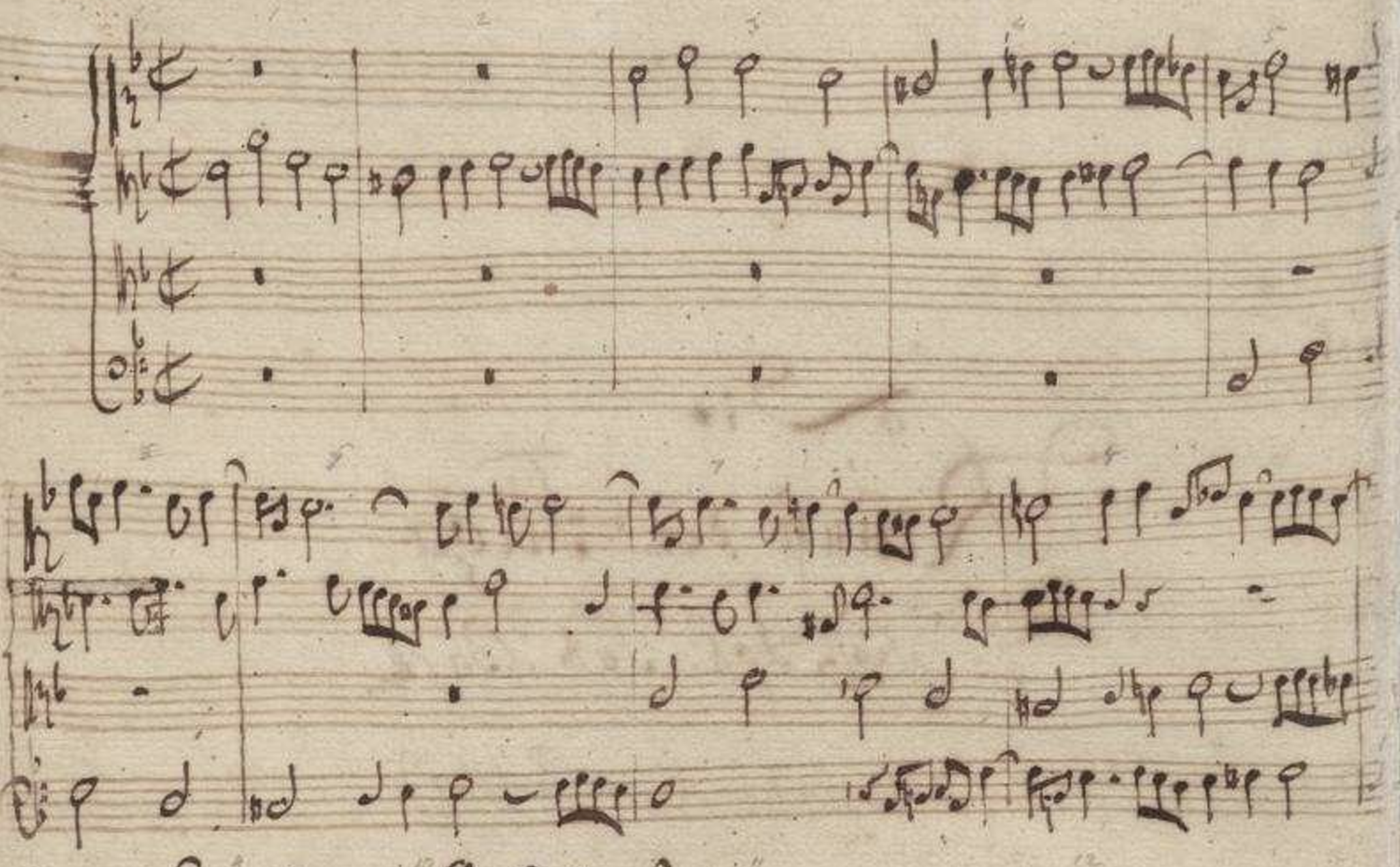
Bach’s handwritten score of The Art of Fugue

As we’ll see, each movement becomes ever more complex. But why did Bach write this magnum opus? Maybe it was the musical equivalent of climbing Mount Everest - simply because he could? Perhaps a more likely reason is it was intended as a didactic work, designed to show others the possibilities of the fugal form.

The final fugue remains unfinished - yet another mystery. There are three possible answers I can see. Perhaps he died while writing, quill in hand? That’s certainly a romantic theory, but probably unlikely. Maybe he purposely left it unfinished so future students could try their hand at finishing the master’s work? Again, this is possible, and dozens of people have done exactly this in the two and half centuries since Bach’s death. If you fancy exploring the infinite possibilities, the Half of the Alphabet blog has collated a list of them, but be prepared to disappear into a vast musical rabbit hole if you start here!

Perhaps the most likely, and most prosaic answer, is that Bach did finish the final fugue, but the last pages have been lost. We’ll look at this theory in more detail later, but at a time when it was far from simple to make a back up of your creations (there were no photocopiers in the 1740s) this strikes me as the most practical reason for its incomplete state.

Which instrument was The Art of Fugue composed for?

This is another conundrum which has had musicians debating for centuries. Bach’s manuscript, and the editions which followed, are laid out in open score (that is a separate line for each voice) rather than the two stave layout we expect for keyboard music today. This has led some to speculate that Bach meant the work to be an intellectual, didactic work rather than one for performance. However, it wasn’t unusual for keyboard players of the period to read from open score, and placing each voice on its own stave also makes the individual melodic shapes much clearer. Modern pianists might find this type of score more challenging to read, but it’s entirely possible to play The Art of Fugue on a keyboard, with two lines being played by each hand.

Of course the open score arrangement has also led many musicians to consider the possibility of performing the Contrapuncti as works for four individual instruments. This has resulted in performances and recordings for almost every conceivable combination of instruments. Woodwind, strings, brass - you name it, it’s been recorded using endless combinations of sounds! This may not have been Bach’s intention, but I like to think he’d have approved of such ingenuity. Some of my favourites include the following:

A life beyond Bach’s death

Unfortunately Bach died before The Art of Fugue could be published, so that task fell to his son, C.P.E. Bach. He oversaw the engraving of the printing plates, as well as including a number of movements which weren’t part of his father’s original plan. The first edition was published in May 1751, some ten months after Bach died, followed by a second edition in 1752. Sadly the copper engraving plates have long since been lost, but a scan of this edition is available to download from IMSLP. Unusually the engraver chose to make good use of the blank space at the end of several of the Contrapuncti, filling it with elegant engravings of flowers, as you can see below. What a shame modern editors don’t think to make such beautiful use of blank pages today!
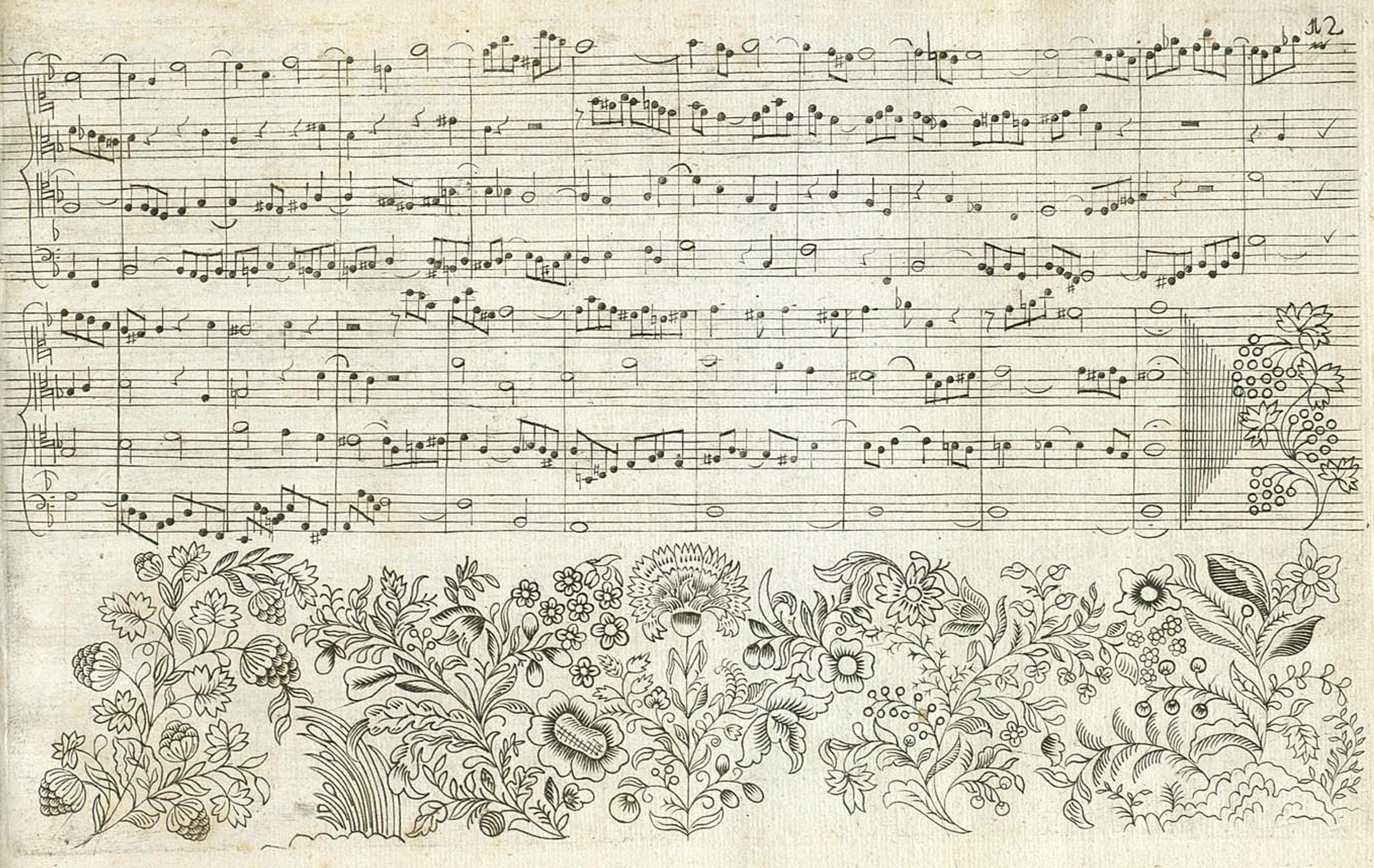
A page from the first edition of The Art of Fugue

Let’s go exploring…

Through this blog I’ll use examples from The Art of Fugue to help you understand the structure of a fugue, but later we’ll look at examples from other composers too. I’ve created my own arrangements of eight of the Contrapuncti for you to play. Look out for the black buttons on screen which you can click to download the sheet music. I’ve also chosen recordings of some of the individual Contrapuncti, played on recorders, so you can hear the music as you follow the score. Think of this as a full immersion exploration of the fugues of Bach and others!

But what is a fugue?

Let’s begin at the beginning…

Every fugue starts with a subject – this is the main theme that runs through the work. In The Art of Fugue Bach uses the following idea as his subject and it connects the entire collection of fugues and canons. It’s made from music’s simplest building blocks – an arpeggio and a scale.

The subject on which the whole of The Art of Fugue is based.

This subject is played by one voice and then imitated by the second voice – this imitation is called the answer. The second voice plays the subject at a different pitch – usually four or five notes higher or lower than the original. If you look at the example (from Contrapunctus I) below, the subject is marked in blue, while the answers are marked in red. See how the second entry of the subject (in the bass part) reverts to the same pitch as the first, while its answer (in the tenor line) is at the same pitch as the first answer in bar 5.

The exposition of Contrapunctus I

In a fugue there are two types of answer – a real answer and a tonal answer. A real answer is one where the notes follow exactly the same shape as the original. A tonal answer is one where the shape of the phrase has been altered slightly to help it fit with the other lines. In Contrapunctus I Bach uses a tonal answer. If it were a real answer the second note (circled in red below) would need to be an E:

Bach’s tonal answer to the subject in Contrapunctus I

While the second voice is playing this answer, the first voice plays a new musical idea against it. If this music also recurs in other lines it’s called a countersubject. Some composers are very consistent in creating a recurring countersubject, but Bach doesn’t use this technique much in The Art of Fugue.

All of Bach’s fugues in this work have four voices, but there’s nothing to say a fugue can’t have fewer or more voices. The key thing is that each voice begins the piece with the subject. When all the voices have played their first iteration of the subject, we’ve reached the end of the exposition. The example above shows the whole exposition of Contrapunctus I.

What comes next?

After the exposition, the music continues through a series of episodes. These give the composer an opportunity to explore fresh musical ideas, bringing the subject back from time to time.

In Contrapunctus III Bach takes the music in a more colourful direction, with slinky chromatic scales (marked in blue below) and a rising scale pattern (marked in red) which repeatedly appears in the bass line to create a sense of cohesiveness.
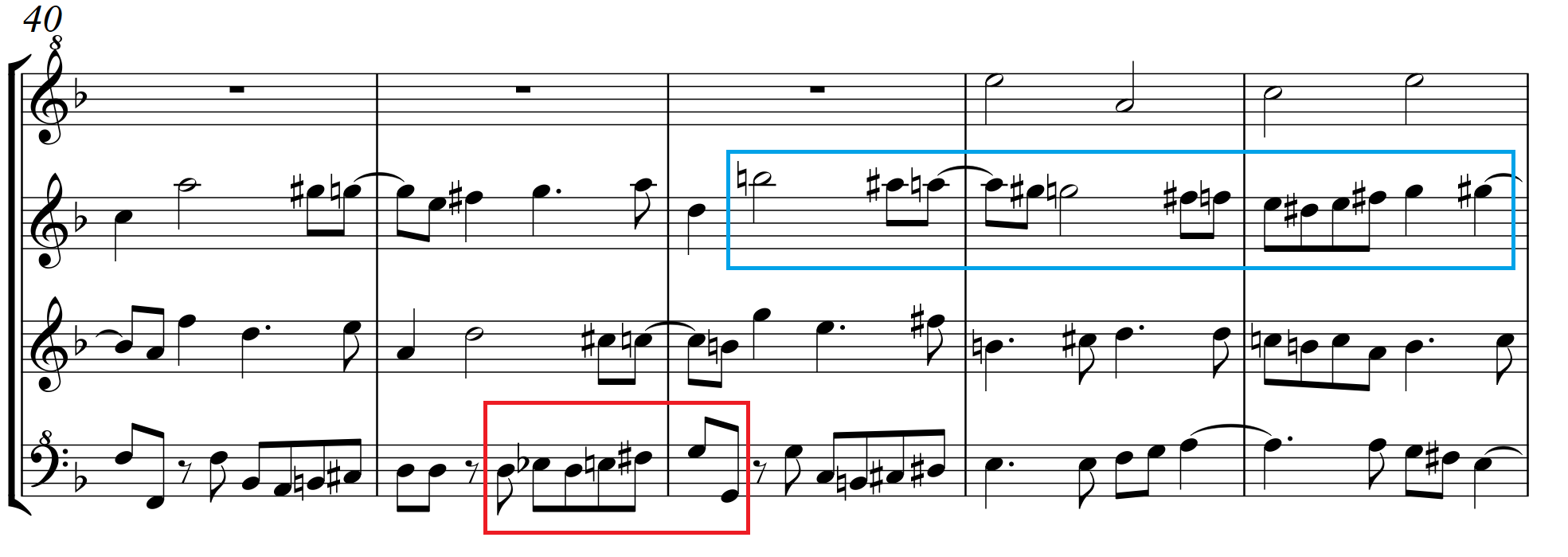
Bach’s clever use of chromaticism in Contrapunctus III

Decoration and ornamentation

There’s nothing in the fugal rulebook to say a composer has to keep the subject exactly the same throughout a fugue. While the form has a very clear structure, there’s no reason why the subject can’t be creatively decorated to vary its rhythmic and/or melodic shape. Bach does this often in The Art of Fugue, and Contrapunctus V is a very good example. He uses dotted rhythms to add connecting notes (circled in red in the example below) between the minims, creating a line which has a new shape but is still perceptibly related to the original subject, as you can see here:

Bach’s decorated version of the Art of Fugue subject

In Contrapunctus II Bach leaves the main subject unadulterated, but instead chooses to have some fun with the melodic lines following its entries. As you can see from this extract from the first published edition, the music is filled with jaunty dotted rhythms interweaving with each other.
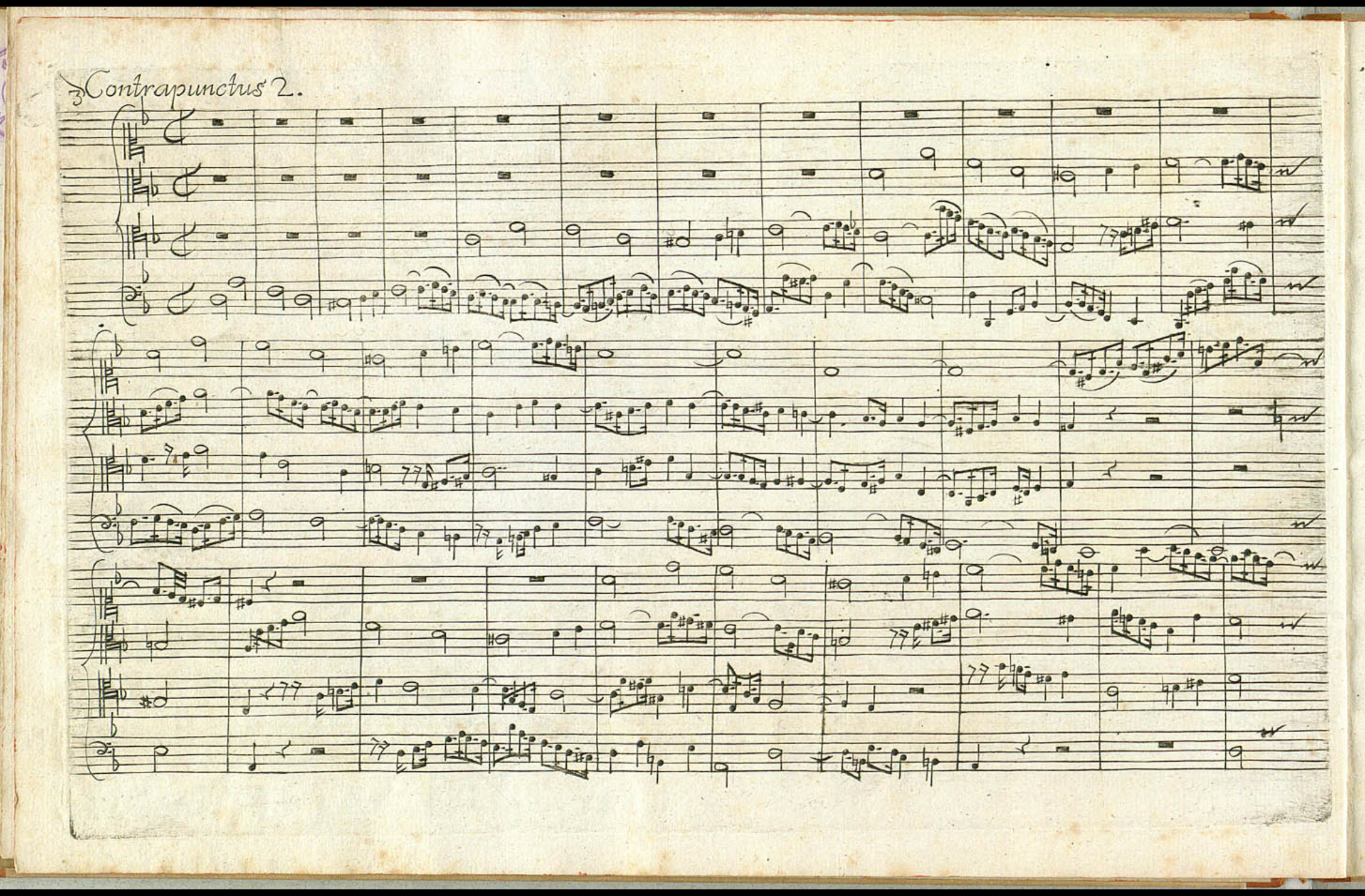
Contrapunctus II with its tapestry of dotted rhythms

Exploring different styles from other nations

In Contrapunctus VI Bach looks beyond his native Germany to the style of another country - France. Here he uses more dotted rhythms, along with free flowing runs of faster notes to create the impression of a French Overture. He even labels the movement, In stylo Francese. As you can see from the extract below, it has a much more florid look and style than the other Contrapuncti, and as a result is rather more challenging to play.

Bach also uses Contrapunctus VI to experiment with some mathematical tricks, but we’ll come onto that in more detail shortly.
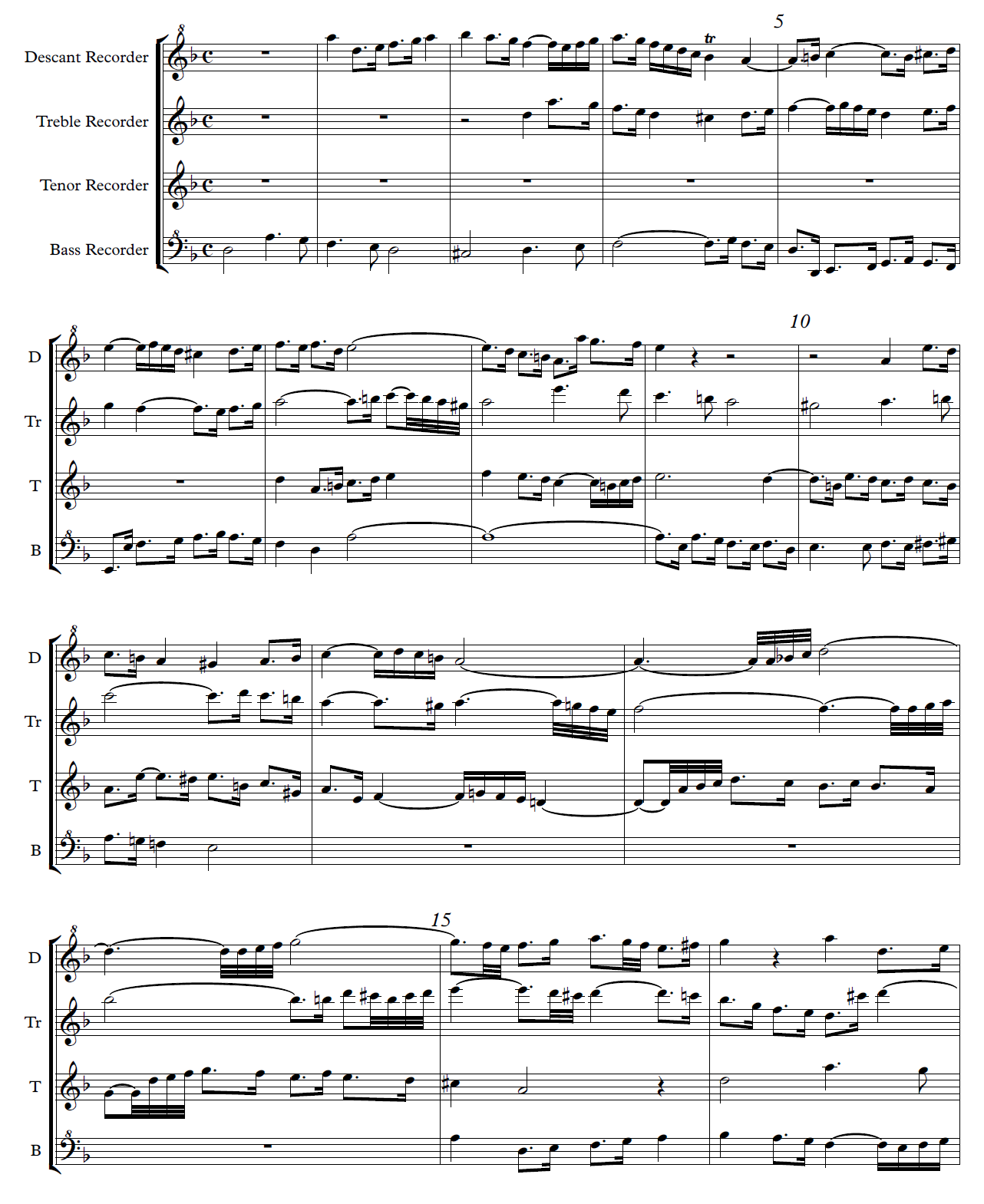
The opening 16 bars of Contrapunctus VI

Inverted music

Have you ever wondered how a melody might sound if you played it upside down? You’re about to find out, because this exactly what Bach does in Contrapunctus IV!

This technique is called Inversion and here the music is literally turned upside down. Intervals (the distance between neighbouring notes) which rise in the original subject will now fall by the same distance, and vice versa. See how the shapes mirror each other in the two examples below. If you have a recorder handy, why not play both versions to hear how inverting the theme changes the sound and feel.

Subject from Contrapunctus I, the right way up…

…and the inverted subject from Contrapunctus IV

Going backwards as well as forwards

You might think Bach used everything from his toolbox when composing The Art of Fugue, but there’s one technique he doesn’t include - that’s Retrograde. This is where a composer flips a theme horizontally, so every note is played in reverse. For instance, a retrograde version of the subject from The Art of Fugue might appear like this:

If Bach had used his theme in retrograde it might have sounded like this….

Bach wasn’t a stranger to the concept of retrograde though, writing a Crab Canon in The Musical Offering, BWV1079. This is an earlier collection of canons and fugues, from 1747, which are all based around a theme given to him by Frederick the Great. In the following version of the Crab Canon for recorders (arranged by R.D. Tennent) you’ll see I’ve marked the first two bars in green. Now look at the final two bars of the tenor recorder part and you’ll see red box, which contains exactly the same notes and rhythms but in reverse. If you follow both lines from opposite ends with your fingers you’ll see the contain exactly the same notes and rhythms - so clever!

Why not find a friend to play this with and you can find out how it feels to play the same music in two different directions at once! You can download the PDF sheet music here.

The Crab Canon from The Musical Offering

Playing with rhythm

As I mentioned earlier, Bach sometimes plays with rhythm in his fugues, by extending and contracting the musical lines.

Making the note values longer is a technique called Augmentation. For example, in Contrapunctus IX he includes main subject of The Art of Fugue, but doubles the length of each note. Compare the two extracts below and you’ll see how each note is twice as long as the original.

Original theme

Augmented theme from Contrapunctus IX

In contrast, Diminution does the opposite, making the note values shorter.

You remember I earlier showed you the decorated theme Bach uses in Contrapunctus V? Not content with simply ornamenting his musical idea, in both Contrapunctus VI and Contrapunctus VII he uses that decorated version in both diminution and augmentation. Not only that, he does this with the theme the right way up, and in its inverted form!

This is the decorated theme:

Compare that with the version in diminution - all the same notes, but half the length:

And finally, the same musical idea in augmentation:

Cranking up the excitement

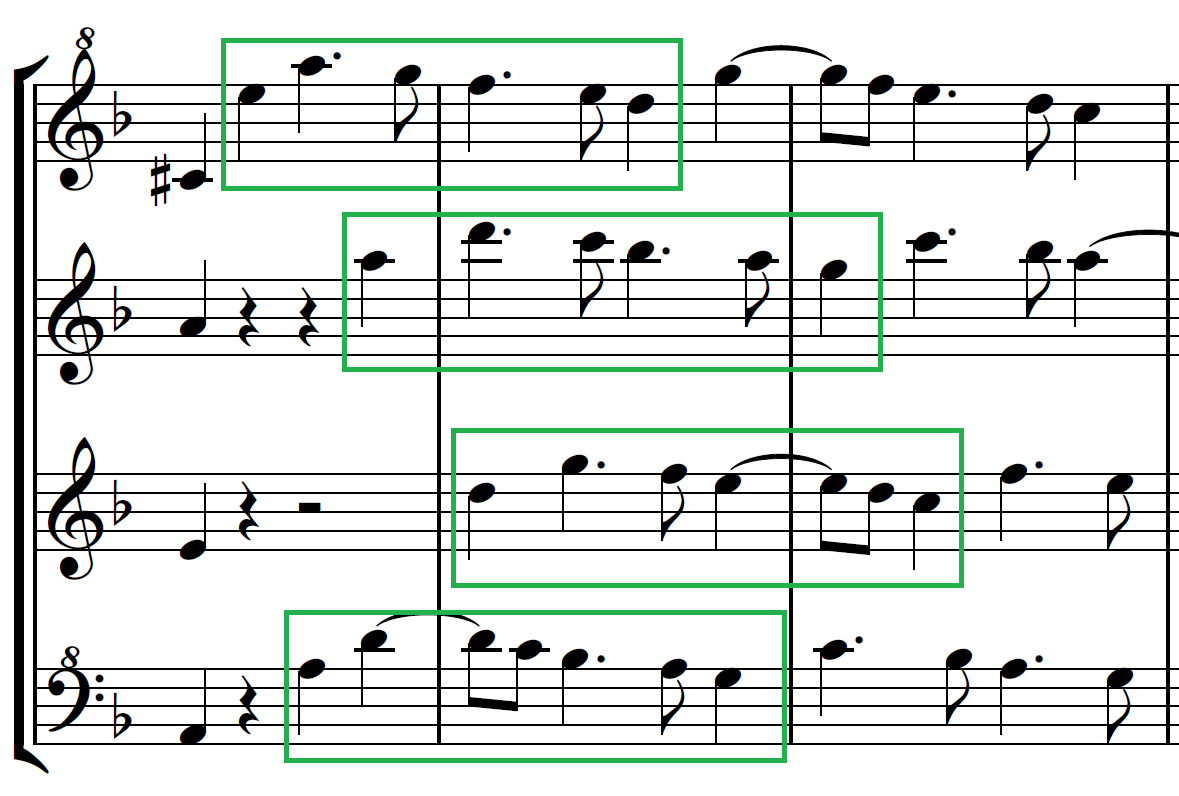
As a fugue progresses, composers often look for a way to crank up the energy and excitement. One way to do this is Stretto – a technique where the main subject is repeated in a second voice before it has finished playing in the first. These closely packed entries create a sense of greater urgency and tension. In Contrapunctus V Bach does exactly this, writing entries of the decorated subject just two beats apart from each other. To add to the complexity, one of them is the right way up (shown with a red box below), while the other is inverted (in a blue box).
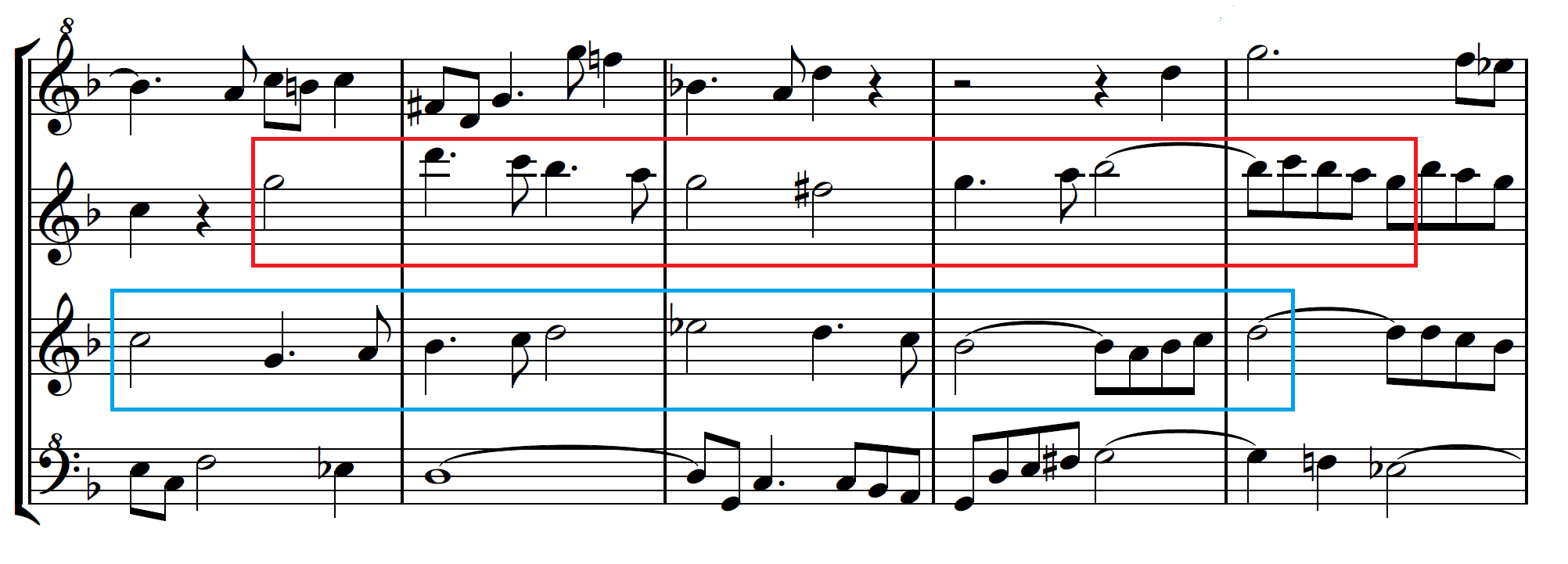
If you want an even more extreme form of stretto, that can also be found in Contrapunctus V. In this extract, he uses just the first few notes of the decorated theme in all four voices, with just one beat between each entry, as you can see with the green boxes below.
Double fugues - twice the fun!

What could be more exciting than a fugue with a single subject? A fugue with two different subjects, of course! Unsurprisingly this is called a Double Fugue, and Bach uses this trick several times in The Art of Fugue.

His first experiment with this appears in Contrapunctus IX, which begins with an entirely new, and altogether more energetic idea:

The new subject for Contrapunctus IX

The movement begins with what seems like a fugue based entirely on this new theme, but he has a surprise waiting in the wings. At bar 35, after all four voices have played this new subject he reintroduces the original subject, from Contrapunctus I, but this time in augmentation, as I mentioned earlier:

From here to the end, every time the busy subject appears it’s accompanied in parallel by the main Art of Fugue subject.

Not content with writing one double fugue, Bach continues with this strategy in Contrapunctus X, although his new musical idea is more fragmented than the one from Contrapunctus IX. Again, he uses it the right way up and in inversion, before reminding us of the decorated version of the main Art of Fugue subject at bar 23. Finally, at bar 44 he brings the two together, as you can see in the full score (which can be downloaded by clicking the button below).

The rather fragmented subject in Contrapunctus X

The grand finale

As if double fugues weren’t impressive enough, Bach brings The Art of Fugue to a climax with a Triple Fugue for Contrapunctus XIV. As you might imagine, this brings together three different, new subjects.

The first subject shares some genetic material with the original, used in Contrapunctus I, but is more static and provides a calm, thoughtful start to the fugue:

Subject No.1 from Contrapunctus XIV

The second subject has a more fluid feel, with running quavers. It’s also the longest subject, running for almost seven full bars:
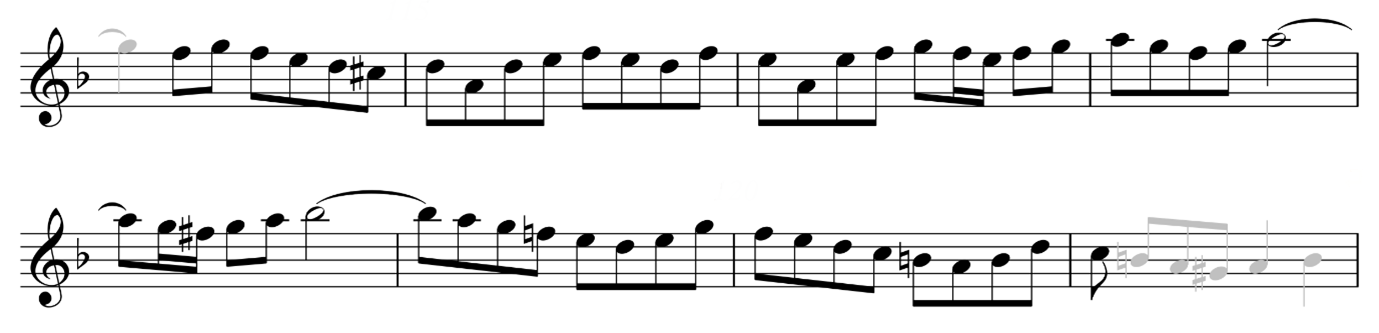
Subject No.2 from Contrapunctus XIV

For the final subject Bach takes an autobiographical turn, converting his name into music. In German the note B natural is indicated by the letter H, so the name BACH is spelt out by the first four notes of the subject. Other composers have also used the same technique. For instance, Dmitri Shostakovich used DSCH as a musical motif D-E flat-C-B natural in several of his works.

Subject No.3 from Contrapunctus XIV

In the final few bars Bach finally brings all three subjects together for the first time. The extract below shows this meeting of ideas, with the 1st subject in red, the 2nd in green and the 3rd BACH theme in blue.

Before we get to see more of how these three ideas will work together, the music stops abruptly at bar 239. It may be that Bach originally intended it to become a quadruple fugue, bringing the original subject back, combined with the others, but his true intentions remain a tantalising mystery!
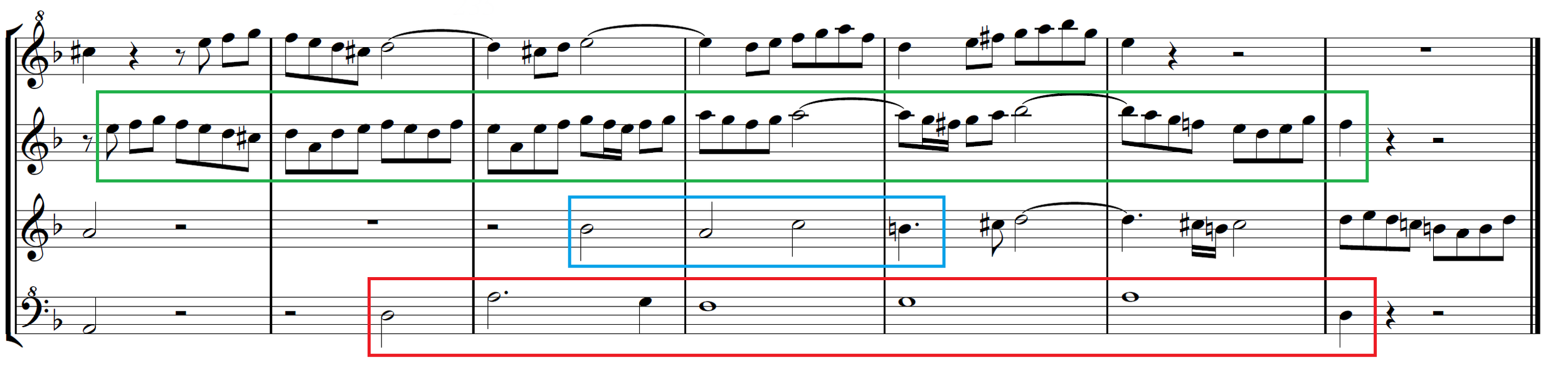
The final few bars of Contrapunctus XIV, where all three subjects coalesce.

It’s not all about Bach…

While you could argue that Bach is the master of the fugue structure, he’s far from the only composer to have written such works. I’m now going to point you to some works by other composers to listen to. Several of them have appeared among my online consort videos over the years, so for those you’ll see buttons which will whisk you over to the download folder, so you can play along with me if you want to.

The roots of the fugue

The concept of imitation wasn’t a new one when Bach started composing fugues - composers had been writing imitative music for many years. Canzon Seconda by Giovanni Gabrieli begins with strict imitation between all four voices. Composed more than a century before Bach wrote The Art of Fugue, it doesn’t yet follow the precise format of a fugue, but you can see its genetic connection to the Baroque fugue.

Bach’s hero

At the age of 20 Bach walked nearly 400 kilometres to meet his hero, Dietrich Buxtehude, and hear him play the organ, so you won’t be surprised to learn that he too wrote fugues. This Organ Fugue in G (you can download the score here to follow along) also uses one of the techniques favoured by Bach in The Art of Fugue, inverting the main theme for the middle section, from bar 19, before returning to its original form for the final section at bar 39.

Beethoven’s counterpoint teacher

Johann Georg Albrechtsberger is best known today as the person who taught counterpoint and fugue writing to the young Beethoven, so it’s no surprise to find he wrote a large number of fugues himself. The subject of this Organ Fugue is really quite simple - just seven notes - but he is still able to create a satisfying fugue from them.

Following in the footsteps of his teacher…

Albrechtsberger was evidently an effective teacher, as Beethoven went on to write powerful fugues in many of his works, including several of his symphonies. His fugal efforts culminated in the Grosse Fuge, Op.133, composed in 1825 and originally intended to be the finale of his 13th String Quartet. By this stage, just two years before his death, Beethoven was profoundly deaf and this disability led him to write some extraordinarily forward thinking and very demanding music. Ultimately his publisher insisted on a different finale for the Quartet, so as not to harm sales of the sheet music, and the Grosse Fuge became a standalone work. It’s an immense double fugue lasting some fifteen minutes and not an easy piece to understand. The video below includes the score on screen so you can follow along to the music as you listen.

The fugue as part of a bigger picture

As I mentioned earlier, fugues don’t have to be standalone works and composers often include fugal sections within larger works. Handel’s Hallelujah Chorus (from Messiah), for instance, begins as a joyful chorus in block harmony, but then introduces a series of fugal entries from bar 41. This doesn’t progress into a full blown fugue, but the subject returns again at the end of bar 71 against the other musical ideas.

Mozart’s foray into the double fugue

I’ve mentioned Beethoven’s double fugue writing already, but there are many more by other composers. One of the best known is the Kyrie from Mozart’s Requiem, which contains two contrasting subjects. You can play along with my consort video, but here is one of my favourite recordings too, which I think captures the full operatic drama of the music.

Fugues in every key

Bach wasn’t the only composer to explore the possibilities of writing fugues in every key - Dmitri Shostakovich also composed a Prelude and Fugue in each major and minor key, inspired by and dedicated to the pianist Tatiana Nicolayeva, during 1950 and 51. No.4 in E minor is a powerful double fugue, played here by Vladimir Ashkenazy. If you’d like to follow the score as you listen you can download it from IMSLP here (page 27). The second subject first appears at the Piu mosso section, and Shostakovich brings the two themes together from the last five bars of page 30.

A devil of a fugue

To complete my round up of amazing fugues, we have a truly astonishing fugue contained within a brass band piece by Derek Bourgeois - The Devil and the Deep Blue Sea. Composed in 1992 as a test piece for the final of the National Brass Band Championships at the Royal Albert Hall, it builds into a truly virtuosic fugue. This was inspired by Edward Elgar’s Introduction and Allegro for Strings, which includes (in Elgar’s own words) “a devil of a fugue”. The subject Bourgeois writes is one of the most expansive I’ve ever encountered, covering some seven bars and dozens of bustling semiquavers, followed by a tour de force of fugal writing.

The fugue (you can see the score here) begins at bar 119 and it’s still going strong a hundred bars later when Bourgeois brings the subject back in the trombones, tubas and timpani at half speed! The entire work last some 17 minutes and I recommend listening to the whole piece, but if you want to skip straight to the fugue, you’ll find it 5 minutes and 10 seconds into the recording below. Bear in mind that this is a performance by a band of amateur musicians - genuinely awe inspiring!

A surfeit of fugues?

If I haven’t already overwhelmed you with fugues, I have one final recommendation, and that’s an episode of BBC Radio 3’s Early Music Show from 2014 about The Art of Fugue. Presented by the late Lucie Skeaping, it also features Simon Heighes, one of my history of music professors at Trinity College of Music, who talks about this magnum opus in a very informative and user friendly way.

I realise this post has been something of a fugal marathon but, as you will now realise, the fugue is an immense subject!

Even if you don’t think you’ll ever listen to fugues purely for pleasure (I know some find them a little too esoteric) I hope I’ve opened your eyes and ears to the special way they organise themes and can create a tremendous sense of excitement and drive. Hopefully you’ll more easily recognise a fugue when you encounter one in future and perhaps appreciate the huge skill required by Bach and other composers to bring the themes together to create a satisfying whole.

Have I missed out a fugue you particularly enjoy? I’d love to hear your thoughts on the topic and perhaps your recommendations from this tremendously broad field - please do leave a comment below to tell us about your favourites!

Time travel for musicians - from the Medieval to the 18th century

What’s your favourite era of music? Is there a style of music that communicates to you more clearly than others? Teachers often refer to different periods of music, but what do we actually mean by Renaissance or Romantic music?

Like art and architecture, music is generally defined as belonging to particular stylistic eras. There are often features in common between these genres - for instance ornate decoration is a characteristic of both Baroque architecture and music. But there are also other terms too, which describe particular styles of music, as much as the period of history in which they were composed. At the most basic level, musical eras are divided up into periods of time, as follows:

  • Medieval up to around 1400

  • Renaissance 1400-1600

  • Baroque 1600-1750

  • Classical 1750-1820

  • Romantic 1820-1900

  • Modern/Contemporary 1900 onwards

While these dates are a useful guide, music doesn’t necessarily fit neatly into them, as we’ll see. Some composers were rule breakers, ahead of their time - think of Carlo Gesualdo, composing extraordinary harmonies in the Renaissance, some of which still feel extreme today. In contrast, we have composers like Elgar whose music is firmly rooted in the Romantic style, even though he was writing at the same time as modernists like Schoenberg. As a result the boundaries become rather blurred, so the dates above are a rough guideline rather than strict rules.

Having a sound knowledge of these different periods of music will undoubtedly help you understand the repertoire you play more easily - a composer’s intentions often become clearer when we understand the context in which they were writing. Of course there are some periods in which our instrument, the recorder, barely featured at all. That’s not to say we won’t play music from the Classical and Romantic periods, but in order to do so, we have to be prepared to borrow repertoire from other instruments.

In this blog post, I’m going to focus on three periods of music, returning to later eras in a future post. My original intention was to cover the whole of western classical music, but I quickly realised doing so would result in something worthy of an entire book, rather than a single blog post! Let’s make a start with the earliest years of formal music making…

Medieval Music

Humans have been making music in one way or another since our species first evolved. Initially we used our voices, but instruments made from animal bones have been found from 60,000 years ago. By the start of the Medieval period, music had become intrinsically linked with the church and it was here that vocal music first flourished. This earliest music can be described as monophony - that is a single line of plainsong, sung in unison. Over time this expanded into organum, where two lines were sung in parallel, a fourth or fifth apart - the simplest form of harmony.

But music wasn’t purely used in religious settings. Troubadors travelled throughout Europe, singing secular songs, often about courtly love. These musicians would have accompanied their singing with instruments such as the lute, dulcimer, vielle, psaltery and hurdy-gurdy. Wind instruments, such as the recorder and flute, were also common, as well as simple brass instruments and percussion.

An Ars Subtilior manuscript

Gradually polyphonic music developed during the Medieval period - the use of multiple lines working independently of each other - by composers such as Machaut and Perotin. Later still, in southern France, music of even greater complexity evolved - Ars Subtilior. This was mostly secular vocal music, with enormous rhythmic complexity - some of it unmatched until the 20th century.

A selection of Medieval composers

Hildegard of Bingen, Léonin, Pérotin, Guillaume de Machaut, Francesco Landini, John Dunstable.

A musical Renaissance

By the time we reach the Renaissance, music was an important feature of all parts of life, appearing in religious, civic and courtly settings.

Early in the Renaissance, the church was still the most significant setting for music and many composers wrote motets and masses for this purpose, usually based around Latin texts. Polyphonic music had now become the norm, with parts moving independently of each other, and lots of imitation between the voices.

A Renaissance printed part book

The advent of printing allowed music to be published at an ever greater rate, with much of it aimed at amateur musicians. Secular vocal music, such as chansons and madrigals, and instrumental music too, was published in partbooks which could be used in a domestic setting. Before this music had to be copied by hand, a very time-consuming and expensive process, and the advent of printing allowed music to be disseminated much more widely and speedily.

Many different forms of instrumental music developed during this period, including forms such as the toccata, prelude, ricercar and canzona, as well as many types of music for dancing. The Canzona gradually evolved into the sonata, a form which composes continue to us to this day. I’ve written a blog all about the evolution from the canzona to the sonata which you can read here.

Madrigals became one of the most popular types of secular vocal music during the Renaissance, and composers typically used word painting to depict the text they were setting. For instance, in Thomas Weelkes’ As Vesta was from Latmos Hill Descending when the text talks of running down the hill we hear the notes in scurrying downward runs.

Renaissance instruments

A bass viol or viola da gamba

The Renaissance saw many developments in musical instruments. The viol family became very became very popular and a huge repertoire of music developed for this family of instruments. Viols (not to be confused with the violin family, which we’ll look at later) have sloping shoulders and a flat back, with six strings (occasionally seven for the bass viol) and frets on the fingerboard to help the player with intonation. Like the recorder, they come in several sizes, from treble down to bass and consort music was composed for endless combinations of treble, tenor and bass viols. This consort repertoire included standalone pieces, such as Fantasias, but dance music too became very popular. Many composers wrote sets of dances, often pairing the Pavan with a faster dance such as the Galliard. I’ve written in more detail about Renaissance dance music here if you’d like to learn more about this topic.

Wind instruments were also popular in the Renaissance, such as the recorder and flute, and they were sometimes combined with strings in broken consorts. Music formed a large part of life in the royal court, in religious, domestic and ceremonial settings. Henry VIII in particular employed a large number of musicians, including a court recorder consort based around the Bassano family.

Precursors to many of today’s instruments developed during the Renaissance, including the violin, lute, guitar, curtal (predecessor to the bassoon) and sackbut (an early form of trombone). These presented composers with an ever greater array of musical colours to explore, although the precise instrumentation was rarely specified in the music. Of course this gives us carte blanche as recorder players to explore any type of music from this period!

The following video features a consort of sackbuts and cornetts. The cornett uses a cupped mouthpiece, much like the trumpet, while the body is made of leather-covered wood and fingered much like a recorder.

Harmony and ornamentation

Although complex polyphonic writing was common during the Renaissance, composers still used simple major and minor harmonies, saving dissonances for special effects and moments of high tension. One harmonic curiosity existed in English music of this period - the use of false relations. This is a simultaneous clash of major and minor harmonies, often at the end of phrases, as rising and falling melodic minor scales meet with each other, as you can hear in the video below. These piquant harmonies are particularly prevalent in the music of composers such as Thomas Tallis and William Byrd.

Another innovation during the Renaissance was the development of ornamentation, in the form of divisions. In contrast to the free trills and embellishments we encounter in Baroque music, Renaissance ornamentation is more structured, with melodic lines being mathematically divided into smaller note values. Sylvestro Ganassi wrote a very detailed treatise teaching the art of divisions, Opera intitulata Fontegara (pictured below), and performers of the day would have been well versed in adding such decorations to the music spontaneously.

The cover of Ganassi’s Opera intitulata Fontegara

A selection of Renaissance composers

Guillaume Dufay, Johannes Ockeghem, Jacob Obrecht, John Taverner, Claudin de Sermisy, Tielman Susato, Giovanni Pierluigi da Palestrina, Orlando de Lassus, Andrea & Giovanni Gabrieli, William Byrd, Maddalena Casulana, Anthony Holborne, Elway Bevin, Thomas Morley, Peter Philips, William Brade, Claudio Monteverdi, Thomas Lupo, John Wilbye, Giovanni Coperario, Thomas Weelkes, Michael East, Samuel Scheidt, John Dowland.

The Baroque - a musical pearl

Next we come to a period beloved by recorder players - the Baroque. The word itself comes from the Portuguese barocco - an oddly shaped pearl - which hints at the ornamental character of music from this period, stretching from Monteverdi to Bach.

While Baroque music had distinct national styles, these became ever more fluid as people travelled more widely. 17th century London, for instance, was a tremendously popular location for musicians, and became a melting pot of composers from all over Europe. The type of music a composer wrote was often dictated by their employer and location. For instance, J.S.Bach wrote lots of sacred music because he was employed by the church, while Henry Purcell wrote many works for the London theatre scene.

A movement from Telemann’s Methodical Sonatas, showing a simple melodic line and how it could be ornamented. Click on the image to see it enlarged.

Ornamentation developed from the divisions of the Renaissance, into much freer but equally florid decorations, including the trills we perhaps most closely associate with Baroque music. Again, several composers (Quantz perhaps being the most famous) wrote treatises on the art of ornamentation, while others composed music with sample ornamentation as didactic resources - for instance, Telemann’s Methodical Sonatas.

In contrast to the Renaissance, polyphony became less important and the concept of a melody with an accompaniment became more prevalent. This was the period where basso continuo developed - a style of accompaniment usually played by a sustaining bass instrument, such as the cello, with a keyboard instrument (harpsichord or organ) providing the harmonies. Rather than prescribing precise notes for the keyboard player, composers simply indicated the harmonies they desired with numbers – figured bass – written above or beneath the bassline. This is a type of shorthand, which may seem impenetrable at first glance, but allows immense freedom for the harpsichordist. With practice a skilled continuo player can interpret the numbers very quickly and add lots of character to the music.

An extract from a recorder sonata by Francesco Mancini, with figured bass above the bassline

The idea of writing for specific instruments became much more common, allowing composers the ability to create carefully planned contrasts of musical colour. That said, it was also common for publishers to suggest a sonata could be played on a variety of instruments (flute, oboe or recorder, for instance) - no doubt a ploy to sell more copies of the music! Baroque composers began to write solo and trio sonatas for specific instruments and continuo, and it was during this period that the concept of a Concerto for soloist and orchestra evolved. The solo parts in concerti were often highly virtuosic – a feature that was retained and expanded during the Classical and Romantic periods.

Another huge development during the Baroque was opera. The genre evolved a long way during the period, from the free flowing writing of Monteverdi to Handel’s very formal Italian operas of the late Baroque. Opera featured two distinct types of music - recitative and arias. Recitative was a musical imitation of speech, usually for a singer with basso continuo accompaniment, and its purpose was to move the storyline forward. In contrast, the aria was a moment for an operatic character to express how they were feeling about what had just happened. These usually had an orchestral accompaniment and gave singers a chance to demonstrate their enormous virtuosity. At this time it was common for men to take all of the leading roles, even playing female characters. The highest, dramatic roles were most often given to men with castrato voices, with best castrati, such as Farinelli and Senesino, commanding huge fees and mass adulation – the equivalent of a modern day Hollywood star. Lower voices tended to be used for comic roles.

Dance music also continued to thrive during the Baroque, although the dances themselves evolved. Out went the Pavan and Galliard, and in came the Gavotte and Minuet. If dance music of this period particularly interests you I’ve written a blog all about the dances which you can find here.

Baroque performance practice

In common with music of the Renaissance, most Baroque composers gave very little information in their music regarding the way it should be played. Performers of the day would have been taught what was expected of them in terms of articulation, phrasing, dynamics and more. But for those wishing to learn more, numerous treatises were published during this era to help performers. For recorder players, the notable sources of advice are by Ganassi and Dalla Casa in the Renaissance, with Hotteterre and Quantz during the Baroque. But if you’re interested in looking for advice from either period, I can recommend this article which shares a comprehensive list of historical treatises.

Instrumental evolution

There were continued developments in musical instruments during the Baroque period, with composers taking advantage of these innovations. The Baroque orchestra was based around an ensemble of strings, as are today’s orchestras, usually with harpsichord continuo adding colour and texture, as well as filling out the harmonies. The instruments used were almost all members of the violin family - violins, violas and cellos. Sometimes you’d have an instrument doubling the cello line an octave lower - either a double bass (with four strings, like the cello) or violone (which had up to six strings). The popularity of the viol family gradually waned during the Baroque, and Purcell’s astonishing Fantasias (composed at the tender age of 21) are some of the last consort works for viols. The bass viol or viola da gamba persisted though, often used in chamber music as both a continuo or solo instrument.

Baroque violin

The violin family became the most important string instruments of the Baroque. Compared to the viol, they have rounded shoulders, a curved back and f-shaped tone holes in the front of the instrument. Both the viol and violin were strung with gut strings (today’s violins use metal strings), so they produce a softer, less strident tone than their modern counterparts. The Italian city of Cremona became a hugely important hub for luthiers (makers of violins, violas and cellos) during the Baroque, with the most talented makers creating instruments which are still in use today. Violins by Stradivari, Amati and Guarneri are played today by the world’s top virtuosos, although many have been modified and strengthened to suit the greater technical demands of 19th century repertoire.

A Baroque oboe, with fewer keys than its modern counterpart

Woodwind instruments were often added to orchestras to create extra colour - perhaps a bassoon doubling the bassline and oboe, recorder and flute player higher lines. It was common for Baroque woodwind players to be multi-instrumentalists, playing oboe, flute and recorder in the same work, switching between movements. It was only in the Classical period that it became the norm to specialise on a single woodwind instrument.

Some composers also add brass instruments into the mix from time to time - notably the trumpet and horn. At this point they were made from simple lengths of bent and coiled metal, with no valves or pistons, so players had to use their embouchure (shaping the lips and surrounding muscles) to play different pitches in the instrument’s native harmonic series. This also meant each instrument could only play in one key. If a composer chose to use the horn or trumpet in a movement with a different key signature, the player would need to remove a section of tubing, replacing it with one of a different length to make the instrument longer or shorter, thus changing its native key.

A Baroque trumpet

Composers of the Baroque

Johann Heinrich Schmelzer, Johann Christoph Pezel, Marc-Antoine Charpentier, Matthew Locke, Henry Purcell, Arcangelo Corelli, Jean-Baptiste Loeillet, Johann Mattheson, Georg Philipp Telemann, James Paisible, Johann Sebastian Bach, Georg Friedric Handel, Domenico & Alessandro Scarlatti, Johann Joachim Quantz.

If you want to explore the music from these periods for yourself, clicking on the composer links will take you to some of my favourites from the consort music I’ve shared with you over the last five years.

So there I’ll pause our exploration of the many musical periods - the remaining eras will follow in a future blog. We stop at the recorder’s high point, with the prospect of more than 150 years to be spent in the shadows. However, a second heyday is still to come, about which more very soon!

Musical evolution - from the canzona to the sonata 

With music, developments usually come through evolution rather than revolution – as in nature, changes happen gradually over time. Musical forms slowly mutate, sometimes changing their names and definitions along the way. Today I’m going to explore two types of music we often encounter as recorder players - the canzona and sonata - looking at the connections between them. In previous blogs where I’ve delved into dance forms we’ve stuck with one period of music, but the canzona and sonata will transport us from the Renaissance right up to the present day.

The Canzona

The Canzona (or Canzon) first emerged in the late 16th century as an instrumental complement to the vocal chanson. Its evolution began in Italy, where Frescobaldi composed lots of them for keyboard instruments and the Gabrielis (Andrea and Giovanni) were writing them for ensembles. Gradually the canzona spread across Europe and ultimately became popular with composers of other nationalities. 

In its simplest form the canzona is a single movement, opening with a musical theme which the composer then varies and develops. This is often achieved by creating imitation between the parts – a technique later used in the fugue in a more precisely structured way. The extract below, from Giovanni Gabrieli’s Canzon Seconda, does exactly this, with the same melodic idea appearing in all four voices in turn, before the composer moves on to other themes. The rhythmic pattern he uses at the beginning is also very typical of canzonas from this period – a long note followed by two short ones.

Play along with Gabrieli Canzon Seconda with my consort video.

As the canzona evolved, composers began to add short sections with different time signatures and tempi to add variety, but these remained interconnected sections rather than separate movements. Most canzonas begin in duple (2) time, with later contrasting sections in triple (3) time. There’s often a mathematical relationship between the tempo of these contrasting sections – something I know many musicians find hard to calculate. I explored this topic in one of my earlier blogs, so if you’ve ever found yourself perplexed by the change from two to three you can find it here!

An extract of a Canzon by Frescobaldi, with linked sections in different time signatures and tempi:

Composers rarely specified the exact instrumentation for their canzonas during this period, opting instead for non-specific part names such as cantus, altus, tenore and bassus. This means they can be freely played on any instruments whose range matches that of the music and we should feel no compunction about playing them on recorders! In 1608 the entrepreneur Alessandro Reverii published a collection in Venice titled Canzoni per sonare con ogni sorte di stromenti, containing music by twelve different composers. The very title of this collection gives carte blanch for them to be played on wind, brass or string instruments and no doubt helped with sales too!

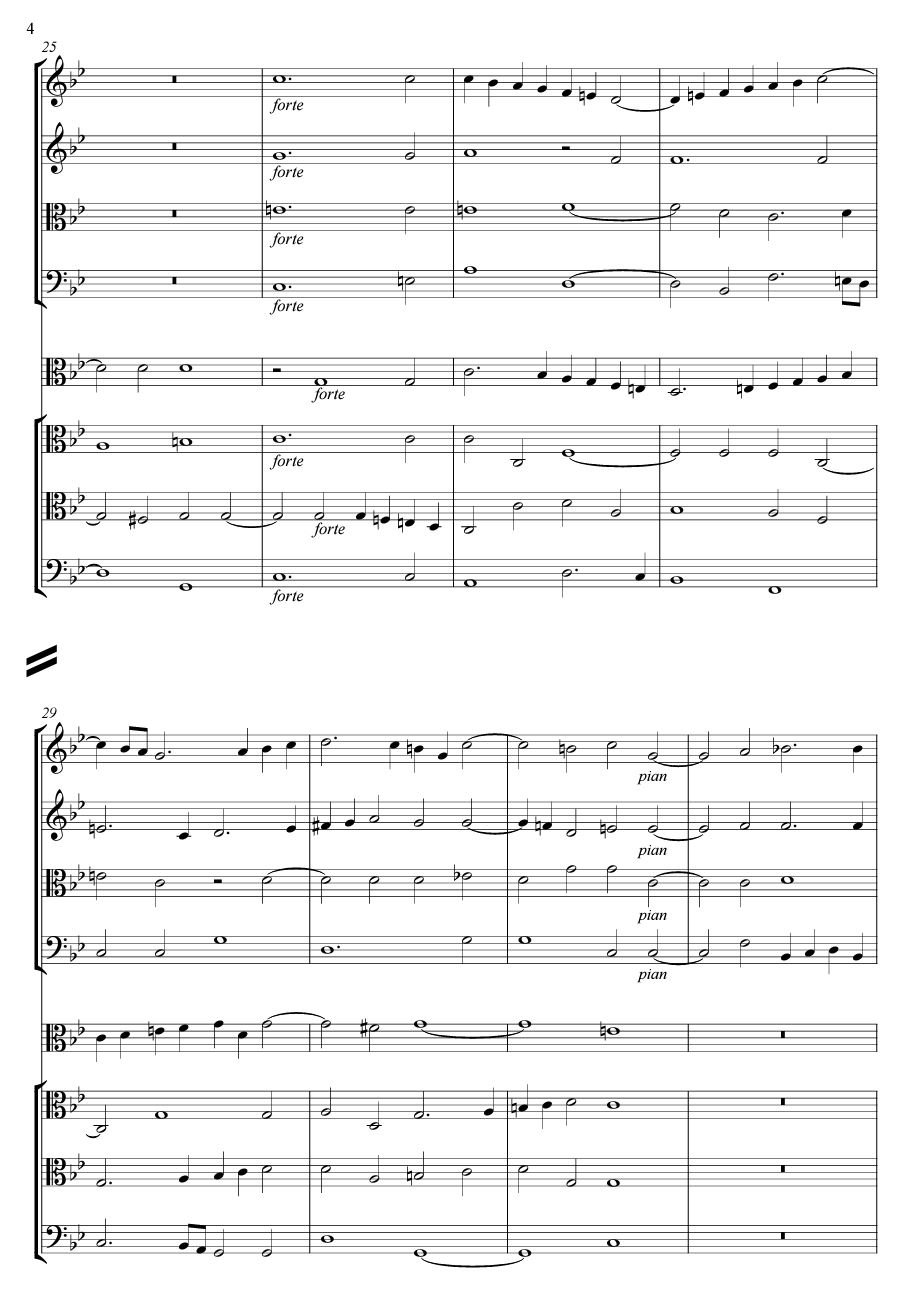
That said, some works do request specific instruments, including some of Giovanni Gabrieli’s later works. His Sonate pian’e forte (1597) specifies it’s to be played by two choirs of instruments – a cornetto and three trombones in one, balanced by a viola and three trombones in the second. This particular piece is notable for other reasons too. One is his use of dynamic markings (as you can see in the extract below) - a real rarity at this time. The second is title - Sonate. In spite of the name, it’s still fundamentally a canzona, rather than a sonata as we would understand it today, but it shows the direction in which music was moving. It’s worth remembering too that the word sonata derives from the Latin word sonare (to sound), implying it’s a work to be played on an instrument rather than sung.

Gabrieli Sonate pian’ e forte

Evolution of the sonata

The title page of Castello’s Sonate concertate in stil moderno per sonar

Gradually, in the middle of the 17th century composers began to separate the canzona's interlinked sections into distinct movements to create the sonata, and this became the dominant form of chamber music during the Baroque period. This change didn’t happen overnight, as you can hear from the recording of Dario Castello’s Sonata Prima below. Despite the name, the contrasting musical sections are still linked to each other in a single movement. This particular work comes from a collection titled Sonate concertate in stil moderno per sonar - Castello’s way of showing that he was exploring newer styles of writing. As a listener it definitely feels modern compared to the music of Gabrieli, but it’s still more closely related to the canzona than the sonatas of Handel and Telemann.

As the contrasting sections broke apart to form distinct movements, some of them would still retain the canzona’s imitative style. This is particularly true of faster movements, where you’ll often hear melodic material shared between the solo and continuo parts.

This little known Sonata in G by Andrew Parcham shows the further evolution of the form. Again, some of the contrasting musical sections run from one to another seamlessly, but there are also places when you sense the transition towards something with clearly separate movements.

Download the music for Andrew Parcham’s Sonata in G here.

When we finally arrive at the high Baroque the sonata emerges in two distinct forms - the Sonata da camera (chamber sonata) and the Sonata da chiesa (church sonata).

The Sonata da Camera has four movements: Slow-Fast-Slow-Fast - a format Telemann uses in many of his recorder sonatas. His Sonata in C from Der Getreue Musikmeister is a good example of the da Camera sonata:

The Sonata da Chiesa on the other hand, has just three movements: Fast-Slow-Fast. In this Bach Sonata for organ the da Chiesa format seems particularly appropriate, given it’s most likely to be played in a church. However, Bach also composed plenty of four movement da Camera sonatas too.

Ultimately the da Camera/da Chiesa concept is something of an academic distinction because a sonata can have any number of movements. Here are two more examples, starting with a Vivaldi flute sonata which has three movements but completely ignores the Fast-Slow-Fast rule!

And then there are sonatas like Handel’s Recorder Sonata in C major, which has five movements. These almost adheres to the da Camera, Slow-Fast-Slow-Fast principle, but then he sneaks in a Gavotte just before the final movement to show that rules are intended to be broken! Technically a piece made up of dance movements is a Suite rather than a Sonata, but it wasn’t uncommon for composers to blur the lines between the two.

Once the Baroque sonata had arrived, rules began to form regarding how it was composed. Usually a Sonata featured one or more solo instruments (as we saw in my recent blog post about trio and quartet sonatas) accompanied by a basso continuo team. This team often comprised of cello or viola da gamba plus harpsichord, but could be varied to use the organ as well as other plucked instruments, such as a lute or theorbo.

The form of the individual movements tends to fall into two categories. Many are through-composed, meaning they have just one continuous section, often using a musical theme which evolves through the movement. The other common format is Binary form which, as the name suggests, is made up of two sections (A and B), each of which is repeated - as you can hear in the first movement of Telemann’s Recorder Sonata in F:

Later sonatas

The sonata continued to evolve through the Classical and Romantic periods - a time when the recorder was sadly all but dormant. The first movement of the Classical sonata evolved from the simplicity of Baroque binary movements into the more complex Sonata Form, which followed an expanded ternary (ABA) structural pattern.

The two sections of the earlier binary form are now combined into one opening section as two contrasting musical themes, each in a different key. This opening section of a sonata form movement is called the Exposition. This is a followed by the Development, where the themes are added to and expanded upon, followed by a Recapitulation, which returns to some of the earlier musical ideas to round off the movement. Sonata form also became the dominant form for the opening movement of many works in the Classical and Romantic periods, including concertos, symphonies and chamber music (e.g. string quartets).

This Sonata Form movement is often the centre of gravity for Classical or Romantic sonatas as it tends to be the longest movement. It was usually followed by three other movements - traditionally a slow movement, a Minuet or Scherzo and culminated with a lively finale of some sort.

The Sonata in the 20th century and beyond

Sadly the recorder missed out on Classical and Romantic sonatas, but many contemporary composers since the recorder’s revival in the early twentieth century have chosen to write sonatas for the instrument. York Bowen (1884-1961) chose to write his Sonatina (a small sonata) in a positively Romantic style, while Lennox Berkeley went for a more contemporary feel. Composed in 1939, this work is one of the first sonatas written for the recorder after its revival.

During its evolution from the renaissance canzona, to the endless variety of modern sonatas, this musical form has undoubtedly covered a lot of ground.

Do you have favourite sonatas you return to regularly, either as a player or listener, for the recorder or any other instrument? Why not share your favourites with us in the comments below - it’ll be fascinating to learn which canzonas and sonatas make it into your personal playlists!

Strictly Come Dancing - Baroque style

Following my exploration of Renaissance dances last year, it’s now time to step (or perhaps dance?) forward into the Baroque period to compare the changing choreographic and musical styles.

When we think of dance forms in Baroque music we’re mostly talking about steps which developed in France and spread throughout Europe. Some of the dance movements we encounter today would have been used for dancing to, while others are a more stylised reinterpretation, such as those used by Bach in his instrumental music.

The nature of Baroque dance

When we think of Baroque dances there are two main types:

Social dancing

The first are the type of dances enjoyed in a social context. Think, for instance of John Playford’s The Dancing Master - a volume of English dances, published in several editions between 1651 and 1738. The first edition was intended for teaching dancing and printed in a small format so a dancing master could secret a copy beneath his cloak to refer to surreptitiously! The Dancing Master only gave floor patterns for dances and not the steps, so it became common for dancing masters to travel the country, teaching the latest steps and how to perform them.

Formal dances

In France social dancing no doubt took place, but the court of King Louis XIV was central to the development of formal dancing - the precursor to classical ballet. These same dances were later introduced to England in the court of King Charles II and subsequent French dance masters worked all over Europe sharing their knowledge. Dances appeared in all types of formal entertainment, from court events to opera and ballet in theatres.

In 1661 the Académie Royale de Danse formally codified the French dance style, resulting in the Beauchamp-Feulillet shorthand notation of dance steps in 1700. This was followed by treatises on the topic, such as Pierre Rameau's Le Maître à danser (1725) which described the steps and gave rules for arm movements.

Now let’s look at the different Baroque dances, many of which you’ll have encountered in the music you play.

Allemande

Allemanda, almain, alman

This is a direct descendant from the Almain we see the music of Holborne and Dowland and the Baroque Allemande became one of the most stylised dances. A line of couples would take each other’s hands and walk the length of the room, taking three steps and then balancing on one foot. This means the music doesn’t need to be played quickly if playing for dancers. The tempo gradually increased as the century went by and the more stylised versions of this dance found in the suites of Bach and Handel are played relatively quickly, almost entirely divorced from the music’s dance origins.

Courante

Corrente, coranto, corant

The courante is often paired with the Allemande in Baroque dance suites. It was popular in both France and Italy and the two countries seem to have adopted different styles for the dance.

In Italy (where it was the Corrente) it was a fairly rapid running dance, with small back and forth steps in triple time. Meanwhile, in France (a Courante) the style was more majestic. In 1725 Pierre Rameau describes it as

“A very slow dance that inspires an air of nobility more than the other dances”.

The common factor between both forms of this dance style is the time signature, which is always in three, usually with a short upbeat of a quaver or semiquaver.

Gavotte

Gavot, gavote, gavotta

Perhaps one of the most familiar Baroque dances, the Gavotte originated from a lively peasant kissing dance. Danced with lifted steps, it became popular in England and France. Later, in 18th century France it adopted a statelier style, in two or four time with a half bar anacrusis and more ornate steps. In common with many baroque dances, most Baroque gavottes are composed in binary form, comprising two sections of music each of which are repeated.

The opening of the Gavotte en Rondeau from Bach’s Violin Partita in E

Bourrée

The dance steps of a Bourrée

Like the Gavotte, the Bourrée is also a dance in duple (two) time, but with a single upbeat and a brisker tempo. It was popular for around a century, starting off as a folk dance in the mid 17th century. It was adopted by the Academie of Dance at the French court, where its small, quick steps were formalised.

The Bach Bourrée above has been influential on many popular musicians, including Paul McCartney who’s said in interviews on a number of occasions that it inspired his song Jenny Wren.

Sarabande

This dance often follows the Courante in a Baroque dance suite but has very different roots. It’s often claimed as a Spanish dance, but there are also links to the New World and the Middle East, depending on which source you consult. There’s a definite connection to the Spanish speaking parts of the New World as the oldest reference to a Zarabanda appears in a manuscript in Panama from 1539. Of course it’s entirely possible the dance had previously been taken there by Spanish explorers, so exact truth may never be known!

The Sarabande’s original dance steps were deemed so salacious and erotic it was banned in Spain by the late Renaissance. Inevitably taking the dance out of reach this just made it even more popular - such is the power of banning something!

By the Baroque it had become a more serious dance and is often assumed to require a slow tempo. But this isn’t always the case - the tempo depends on location. It was played more quickly in Spain, Italy and England, and slower in France and Germany. Two things are consistent regardless of the nationality - the music is in triple time and has a characteristic rhythm. This features a lifted first beat, followed by a minim or dotted crotchet, creating a stress on the second beat of the bar. Phrases frequently end with a weak (sometimes called feminine) ending.

Sometimes the Sarabande is combined with a ground bass, such as La Follia (also from Spain). This chord progression in triple time fits the dance’s rhythmic patterns perfectly and often forms the basis of sets of variations, as in the example by Corelli above.

Gigue

Giga, jig, jigg, jigge

The Gigue is usually the last dance of a baroque suite and has a quick tempo. It was popular in England from the 15th century, eventually gaining popularity in both France and Italy. In its earliest form it was consider a vulgar dance and Shakespeare refers to this characteristic in Much Ado about Nothing:

“Wooing is hot and hasty Iike a Scottish jigge.”

Over time it evolved into a more refined dance and in the 17th century Purcell included several Jiggs in his theatre music. The most obvious characteristic of a Gigue is its compound time signature (usually 6/8 or 9/8), with its lively ‘rumpty-tumpty’ rhythms. More recently, the theme from the radio show The Archers could definitely be considered a Gigue! The complexity of the music varies according to location, with simple line and harmonies in Italian examples and more complexity in France.

Loure

The Loure is another dance whose roots are in France - probably with its origins in folk music. Usually in compound time (6/4 or 6/8 time), it’s a slow, poised dance - sometimes described as a slow gigue. Johann Mattheson described it in 1738 as

“proud and self important in character”.

The dance often begins with an anacrusis (upbeat) of one and a half beats, as you can see in this example by Telemann. Sadly its popularity was short lived and was little used by later composers.

The Loure from Telemann’s Water Music

Minuet

Menuet, menuetto

Originating in France, the Minuet was an elegant dance in triple time, performed by pairs of dancers who begin in couples before coming together to dance across the floor in an S or Z shape pattern - thought to be a reference to Louis XIV’s fame as the Sun King. The musical lines fall into straightforward four bar phrases, accompanied by a walking bassline mostly in crotchet beats.

Unlike many of the dances we’ve looked at so far, the Minuet retained its popularity well beyond the baroque period. Gradually it lost its connection with dance, becoming a common musical form in concert music, such as symphonies and string quartets.

One characteristic which persisted from the Baroque was the inclusion of a Trio in many Minuets. This originated as a middle section for three instruments, often two oboes and bassoon - a combination popularised by Lully. This creates a contrast and is followed by a repeat of the Minuet straight afterwards, but played without repeats.

Passepied

A lively dance from Brittany which became popular in the mid 17th century. It tends to be in a fast triple time (usually 3/4 or 3/8) with an upbeat and, as the name suggests, the steps consisted of the feet passing each other, crossing and re-crossing. It often appears in French Baroque opera and ballet in pastoral scenes, but the Passepied continued to appear in later instrumental music, such as the last movement of Bach’s Orchestral Suite No.1.

Rigaudon

Rigadoon

This is another lively dance in two time, similar to the Bourrée. Originally a folk dance from southern France, its hopping steps gained more formal popularity in the court of Louis XIV and remained in favour throughout the 18th century in France.

Hornpipe

Naval cadets dancing a hornpipe on deck in 1928

While the majority of the dances popular during the Baroque period developed in France, the Hornpipe was most popular in England. Today the term probably conjures up images of sailors dancing on deck, and it probably originated on English ships during the 16th century. Sailors’ hornpipes could be danced in duple or triple time, depending on the location. The Hornpipe performed at the Last Night of the Proms each year is in two, while the folk form danced in Northumberland and Scotland is often in three.

The hornpipes composed during the Baroque period tend to follow this latter format, with a triple time signature. There are lots of examples in Playford’s The Dancing Master, while both Purcell and Handel composed Hornpipes too, sometimes incorporating Playford’s popular dance tunes.

Hopefully this fandango through a myriad of Baroque dances has left your toes tapping. Which ones are your favourites? I’m partial to a sonorous Sarabande myself, but when the mood takes me I could be tempted to gad around to a lively gigue! Below you’ll find a list of some of my own consort videos which include these dances, so you can play some of them yourself - either with me or with friends. Enjoy!

Bach Rondeau from Orchestral Suite No. 2 Gavotte

Bach Orchestral Suite No.3 Gavotte, Bourrée and Gigue

Handel Water Music Sarabande, Bourrée and Minuet

Handel Fireworks Music La Rejouissance and Menuet

Mozart Menuetto from Symphony No.39 K.543

Pezel Four Dances Sarabande, Allemande and Courente

Telemann Suite in G major Gavotte

An instrument of many different characters

For many people the first image to come to mind when the recorder is mentioned will be the descant they encountered during their school years - quite possibly a plastic one, played very badly. But those of us in the know understand our favourite instrument has many more facets. Even so, many recorder players are really only familiar with mass produced Baroque style instruments, whether they’re made from plastic or wood.

Throughout history, the music composed for the recorder has changed, and the instrument has evolved in parallel to suit new fashions and styles. This is the first of a series of blog posts about the recorder’s different characteristics, exploring the way the instrument’s design has changed over the last six centuries. Today I’m going to talk about Renaissance and Baroque recorders. Since the recorder’s revival in the early twentieth century there have been many more developments, but I’ll talk about those in a subsequent post.

There’s absolutely nothing wrong with using Baroque style recorders to explore our varied repertoire, but maybe this will open your eyes to the way a historically appropriate design of recorder can influence the way music from different periods is performed.

The Medieval period

The oldest surviving recorders date back to the fourteenth century. The best known is perhaps the Dordecht recorder, found in the Netherlands in 1940. These ancient instruments are a simple design, made from a single piece of wood, but they share the recognisable features of our modern recorders - a windway created by the insertion of a fipple (the block) into the mouthpiece and a thumb hole to allow for a greater range of notes than a simple whistle. Sadly many of the surviving recorders are in poor condition as their wooden construction made them prone to damage or decay after they were discarded.

Renaissance recorders

By the time we reach the Renaissance period, we not only have a much larger array of surviving original instruments to study, but plenty of imagery too. This illustration, taken from Michael Praetorius’ treatise Syntagma Musicum (1614-20), clearly shows a sizeable family of recorders, from tiny to large.

The Renaissance look

Renaissance recorders look very different to the Baroque ones we often play today. The smaller instruments, from the tenor upwards, were usually made from a single piece of wood, while the larger recorders were creates in two pieces. Their outline tends to be very simple, with few decorative features - a straight body with a flared bell.

Another detail you may notice from the image above is the appearance of two holes for finger seven (clearest on the 6th recorder from the left). This allows the instrument to be played with the left or the right at the top and the unused hole would have been filled with wax. Larger recorders needed keys to make the lowest notes playable and these were made with a characteristic butterfly shape for the same reason. It’s normal to play with the left hand uppermost today, but if you study paintings from this era you’ll see they feature both left and right handed recorder players fairly equally.

A consort of recorders by Adrian Brown, based on an image from Sebastian Virdung's treatise Musica getutscht. The recording below was performed on a consort like this.

The elegant butterfly keys were only necessary for the larger sizes of recorder - certainly on basses and on some tenors too. The lower part of the key was often covered with a fontanelle made of perforated metal or wood. This protected the vulnerable mechanism, but added a decorative element too. The holes in the fontenelle also allow air to escape - without these it would have a negative effect on the tuning.

You might think that having instruments made from a single piece of wood would create difficulties with tuning – after all, you can’t adjust the pitch of a single piece recorder by pulling out the headjoint. Recorders of this period were almost always made in consorts at one pitch, so this was less of a problem than we would consider it today.

Most Renaissance bass (or basset as Praetorius calls them) recorders were direct blow models, although you need longer arms to play these compared to modern knick basses. Larger bass instruments existed too, the longest of which is listed in the inventory of Queen Mary of Hungary. It’s described as being a ‘baras’ in length - that’s about two and a half metres! For these largest recorders a crook or bocal is needed to carry the player’s breath to the windway, as you can see in the Praetorius image earlier. The video below features the Royal Wind Music performing on a consort of low recorders and you can see at close quarters the additions needed to make the biggest ones playable!

Not just recorders in C and F

Today’s recorders tend to use mostly C and F fingerings, but Renaissance recorders weren’t so consistent. Consorts of instruments were often pitched a 5th part - for instance a basset in F, a tenor in C, a treble in G and perhaps even a descant in D. These letters always refer to the lowest note of the recorder. To our modern brains playing recorders in G and D might require greater mental gymnastics than we’re used to, but I’m sure Renaissance musicians were entirely comfortable reading at any pitch, playing from a greater variety of clefs than we expect today too.

Renaissance tone begins inside the recorder

While Renaissance recorders look simpler on the outside, the shape of the internal bore is also very different. Inevitably this varies between the historical instruments which survive today, but they all have certain similarities. The bore tends to be mostly cylindrical, but with a noticeable flare at the bottom end. It’s this internal shape that influences the characteristics of the recorder’s tone and response.

Recorders from the Renaissance, often have a slightly smaller range than Baroque models - sometimes as little as an octave and six notes. Most music echoed the range of the human voice though, so this wasn’t a great restriction for composers. The lowest notes tend to be much richer and stronger, often demanding greater reserves of breath to fill out the tone. Because of this strength of tone more incisive articulation is also possible, making it easier to bring out the complexities of counterpoint and melodic shapes we so often see in Renaissance music. You can hear this clearly in Sirena’s performance of La Lusignola by Tarquinio Merula.

Fingerings and pitch

Most mass produced modern recorders are played with a pretty standard set of fingerings. The different bore shape of Renaissance recorders requires some variations on these fingerings. For instance, the ninth note from the bottom (middle D on a tenor recorder, or G on a treble) would have been played by covering none of the finger holes rather than using finger 2 as we would today. Handmade professional consorts of Renaissance recorders, such as those by Adrian Brown or Tom Prescott, retain these authentic fingerings. However, many of the more affordable consorts by makers such as Moeck and Mollenhauer, have been tweaked to allow the use of the more familiar modern fingerings.

Some time ago I shared a blog about the history of pitch, where we discovered that the standardisation of musical pitch is really quite a recent concept. During the Renaissance period music was generally performed at a higher pitch than we would expect today, and as a result some modern copies of old instruments are made at A=466. This is a pitch of convenience which has become internationally recognised, but it wouldn’t have been the case then. Instruments would have been crafted to match the pitch of instruments which can’t easily be adjusted, such as church organs, and pitch would probably have varied from village to village. The solution was to make recorders in matching consorts so you could make music together - undoubtedly why King Henry VIII’s inventory lists no fewer than 76 recorders!

Before you buy…

If you’re thinking about purchasing some Renaissance style instruments it’s important to consider how you’ll use them first.

Many professional ensembles commission a matching set of consort instruments from their preferred recorder maker. This creates a well matched sound and makes the tuning easier. Such instruments are often pitched at A=466 - around a semitone higher than modern concert pitch. If you only play the recorders together this is fine, but it’s probably more practical to stick with A440 if you want to have the flexibility to play with others.

The Renaissance instruments offered by the mainstream recorder brands are a good place to start if you want to dip your toes into this sound world at a more modest price point. I use Mollenhauer’s Kynseker instruments, but there are similarly priced Renaissance instruments available from Moeck and Peter Kobliczek, and it’s worth keeping a lookout for instruments for sale secondhand.

The Ganassi recorder - reality or myth?

In his 1535 treatise Opera intitulata Fontegara Sylvestro Ganassi reveals his discovery of a further octave of notes above those normally played on the recorder. He shares fingering charts for these additional high notes, noting adjustments which need to be made to one’s breath and articulation to achieve them.

The title page of Ganassi’s Opera intitulata Fontegara, featuring a consort of recorder players.

One thing Ganassi doesn’t include is a detailed description of the type of recorder required to play these notes. In the 1970s unsuccessful efforts were made to locate an original recorder capable of playing with his fingerings. In the absence of such an instrument, several contemporary makers, such as Fred Morgan, Alec Loretto and Bob Marvin, created their own designs to fill this gap. Externally they were modelled on pictures from La Fontegara, but much experimentation was needed to find the appropriate bore shape and level of flare at the bell to work with Ganassi’s fingerings. Ultimately the ‘Ganassi’ recorder is a modern creation, but still much loved by players today. I have a Von Huene Ganassi descant myself and love its rich tone, full low notes and the ease with which it plays the higher notes.

Baroque recorders - a change of purpose

The concept of the recorder as a consort instrument became less pervasive as time passed. There’s a small handful of pieces composed specifically for recorder consort (the Schmelzer Sonata à 7 is probably the most familiar) but in general the instrument took on a new musical role. As composers began to include the recorder in chamber music with other instruments and as the solo line in concertos a new sound and style was needed.

Whereas the Renaissance consort used the different sizes of recorder equally, during the Baroque the treble became the most popular size of instrument. The other recorders didn’t entirely fall out of use, but it was the treble that Bach, Telemann and Handel chose to use in their solo sonatas, cantatas, chamber music and concertos in combination with many other instruments. For instance, Bach’s Brandenburg Concerto No.2 has four soloists, playing recorder, oboe, violin and trumpet.

Baroque elegance

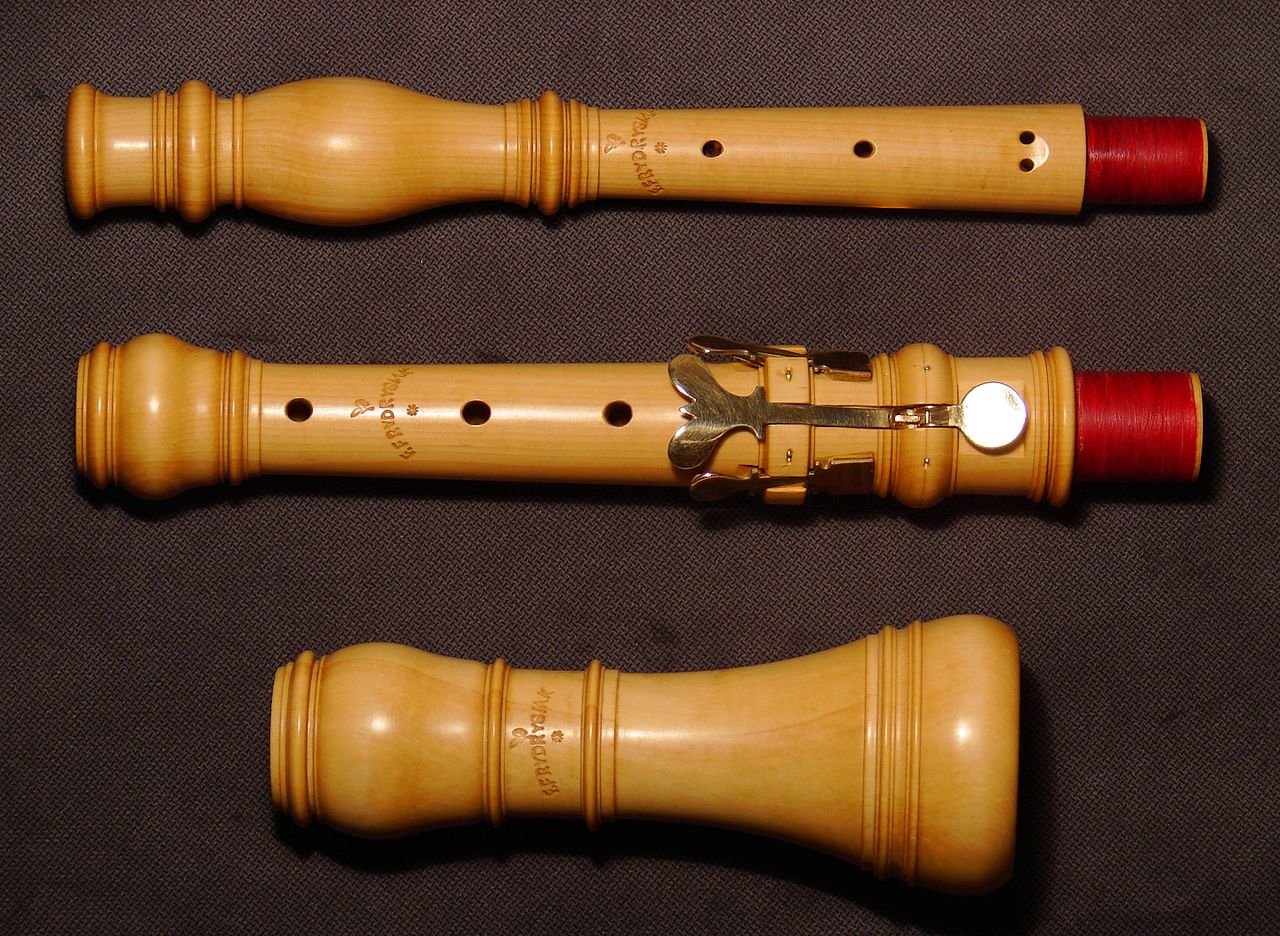
At first glance the biggest change to the Baroque recorder is its external shape. Gone is the one piece design. Almost all recorders from this period (aside from some sopraninos and descants) are made from three pieces - the headjoint, body and footjoint. Creating breaks in the instrument adds points of weakness, so makers compensated by making the wood thicker here. These bulbous points added strength, but also created an opportunity for decoration - a stylistic feature we also see in Baroque architecture and fashion. Some makers took this to extremes, using complex wood turning and ivory rings.

The iconic image from Hotteterre’s 1707 treatise on playing the recorder, flute and oboe. The recorder’s decoration is as ornate as the player’s cuffs!

Another change to the Baroque recorder is the shape of the mouthpiece - often elegantly carved to look more like a beak. This has no effect on the tone, but was no doubt more in keeping with Baroque style and elegance. This feature also brought us the French name for the instrument - flute á bec.

At the other end of the recorder, another innovation was introduced by Peter Bressan - the addition of double holes for the lowest two notes. We take such luxuries for granted today, but this simple innovation makes the lowest semitones stronger and  clearer - something that would become more important as music became more chromatic.

Many recorders have survived from the 18th century and can be seen in museums around the world. Fortunately contemporary makers have been allowed to examine these instruments and take measurements, resulting in modern copies for us to play today. Look at any recorder maker’s website and you’ll find recorders based on those by Peter Bressan, Jean-Jacques Rippert, Jacob Denner, Thomas Stanesby and others.

Inside the Baroque recorder

The Baroque recorder doesn’t just look different on the outside - the interior also changed to meet the demands of the new music. The headjoint remains almost cylindrical, but a taper is introduced through the body of the instrument, becoming most extreme at the footjoint. This taper has two purposes. From a practical point of view it allows for more comfortable placing of the fingerholes, but more importantly it greatly affects the sound of the instrument. Gone are the fruity low notes - the lowest tones are now much gentler. By way of compensation, the high notes are much stronger and easier to play - perfect for the florid passagework of Bach and his contemporaries. The Baroque recorder has a larger range too - at least two octaves and a note, but some composers (particularly Telemann) went further still, expecting players to reach the giddy heights of top C on the treble from time to time!

Mimicking the human voice

While recorders in C and F were the most common, a handful of other variations exist too. One of these is the Voice Flute - a recorder which sits between the treble and tenor, whose lowest note is D. The voice flute probably originated in the court of King Louis XIV of France, in Lully’s orchestra. It allowed recorder players to play music originally intended for the flute at the correct pitch. Of course its range, from the D above middle C also mimics that of the female human voice and this is likely to be the origin of its name.

It was commonplace during the Baroque to transpose flute music a minor third higher to place it within reach of the treble recorder. But this makes the music sound brighter and loses some of the mellower tonal qualities of the transverse flute. The voice flute, with its lower pitch, retains some of this character, while also being as agile as the treble recorder. Several original voice flutes survive today and modern copies based upon instruments by Bressan, Rippert and Stanesby are available for those who wish to explore this lovely sound world.

Other curiosities

Smaller recorders became less common during the Baroque period, but a handful of wonderful works exist for the higher instruments. Vivaldi composed three concertos for the ‘flautino’ or sopranino, although his scores also indicate that the music can be played a fourth lower on the descant.

The descant recorder and its close relatives also largely fell out of fashion at this time, although a handful of composers persisted with it in England. The names of such recorders often described their relationship to the treble recorder. Therefore the descant was a fifth flute because it’s pitched a fifth above the treble. It’s this recorder for which Giuseppe Sammartini, an Italian oboist working in London, composed his delightful concerto.

Alongside the descant there are two other variants. The fourth flute was pitched in B flat, a fourth above the treble and sounds rather mellower than the modern descant. It’s something of an anomaly, but two lovely suites by Dieupart survive for this instrument.

A more common small recorder (at least in England) was the sixth flute, sounding a sixth above the treble, and an octave above the voice flute. Three composers, William Babell, Robert Woodcock and John Baston, chose this as their instrument of choice for their charming concertos. These were almost certainly composed to be played between the acts of operas in London and the high pitch would no doubt have commanded the audience’s attention.

Should you invest in different types of recorder?

The decision of buy different types of recorders is a very personal one. If your playing comes as part of a massed ensemble, such as an SRP branch, a Baroque style recorder may suit your needs just fine.

On the other hand, if you play lots of Renaissance music, especially in smaller consorts, using historically appropriate instruments may help you get closer to the sound world of the period. Renaissance recorders require a different style of playing, from breath control to articulation, and can help you understand the music better. During my first year at music college our department invested in a double consort of Mollenhauer Kynseker recorders. We immediately noticed the difference. Suddenly we could use the appropriate articulation to bring out the cross rhythms and it was much easier to create sweetly tuned chords. Even when recording my consort videos now, I always use my Kynseker recorders for Renaissance repertoire and I hope perhaps you can hear some of these differences in the tone, style and articulation.

Ultimately your choice may come down to budget - after all, none of us have bottomless pockets. If this is the case and you have no plans to buy more recorders, I would still encourage you to at least try them when you have an opportunity - perhaps at an early music festival or during a recorder course where there’s an in house recorder shop. Trying a Renaissance recorder or voice flute for even a few minutes will give you a glimpse into these different sound worlds and a greater understanding of how the instruments we play can change the way we play the music written for them.